
Solution providers are what professionals fundamentally are within organizations.
This may sound obvious. Perhaps it is. Yet some of the most important ideas in management become invisible precisely because they seem too obvious to repeat.
Since human beings first began organizing themselves collectively, cooperation has existed largely because certain problems could be addressed more effectively together than individually.
That logic remains unchanged.
A company solves problems for customers. A hospital addresses health-related needs. A university deals with knowledge and education. A bank handles issues involving payments, credit, investment, security, and financial organization. Public institutions respond to collective needs that individuals cannot adequately manage alone.
Therefore, regardless of title, hierarchical position, or professional specialty, one fundamental question remains:
What problem am I here to help solve?
We Sometimes Forget Why Organizations Exist
Organizations naturally become complex.
As they grow, they develop departments, procedures, budgets, reporting systems, indicators, technologies, meetings, committees, and hierarchies.
All these mechanisms may be necessary.
However, complexity creates a risk. Over time, professionals can begin to confuse organizational mechanisms with organizational purpose.
Completing a report becomes an objective.
Following a procedure becomes an objective.
Holding a meeting becomes an objective.
Achieving an internal indicator becomes an objective.
Yet none of these activities has value by itself.
Their value depends on whether they contribute to solving a problem or creating something useful for someone.
That distinction may appear simple, but it can fundamentally change how management is understood.
What Is Expected of Us?
When entering an organization, especially in a new position, people often ask:
What is expected of me here?
The formal answer usually comes from a job description.
A professional may be expected to manage a team, prepare reports, analyze data, supervise operations, develop strategies, negotiate with suppliers, serve customers, or coordinate projects.
Those are descriptions of activities.
They are not the deepest explanation of the role.
Behind them lies something simpler:
The professional is expected to help solve problems.
Managers bring problems.
Colleagues bring problems.
Customers bring problems.
Suppliers sometimes bring problems.
Society itself may confront the organization with issues requiring answers.
Professional value, therefore, cannot be reduced to completing tasks.
Tasks are means.
Solutions are the reason those tasks exist.
Colleagues Are Also Recipients of Our Work
Problem solving should not be restricted to external customers.
Inside organizations, people constantly serve one another.
A manager depends on information produced by another department.
A salesperson needs support from operations.
Operations depend on technology.
Technology depends on clear requirements.
Senior management relies on reliable analysis.
Employees rely on human resources, legal teams, finance, administration, and many other internal functions.
Organizations can therefore be understood as networks of people solving problems for other people.
An internal colleague may, in this sense, be considered a recipient of professional value.
This does not mean transforming every organizational relationship into a commercial transaction.
It means recognizing interdependence.
If someone needs our work in order to perform theirs, then our contribution is part of a solution.
Products Are Means, Not Ends
The same logic applies to products.
Organizations sometimes become so attached to what they manufacture or sell that the product itself begins to look like the final purpose.
Technical specifications improve.
Features increase.
Packaging changes.
Production becomes more efficient.
All of this can be useful.
However, a technically excellent product may still fail if it does not solve a meaningful problem.
Customers rarely want products merely because those products exist.
They want what those products make possible.
A person may not fundamentally want a financial product. The deeper need could be security.
Someone may not want transportation itself. The real need may be arriving safely and on time.
A company buying software may not fundamentally want software. It may want greater productivity, fewer errors, faster decisions, or less frustration.
Even symbolic or emotional purchases address needs.
Luxury goods may respond to identity, recognition, belonging, pleasure, status, or self-expression.
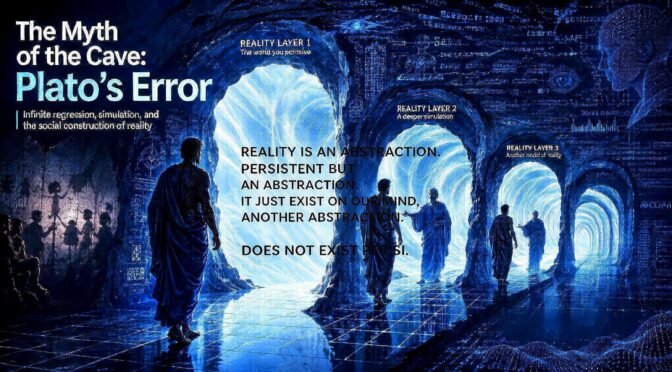
From the customer’s perspective, products do not truly exist per se.
They are instruments through which needs are addressed and problems are solved.
Things Are Created to Solve Problems
Much of what organizations create consists of physical, digital, financial, or conceptual constructions designed to address human problems.
Products, services, processes, systems, institutions, brands, contracts, and organizational structures are all created for a purpose.
None of them should become detached from the problem that justified its existence.
When that connection disappears, an organization may become extremely efficient at producing something that no longer matters enough to the people it was meant to serve.
This is why one question should remain permanently alive:
What problem does this solve?
Shareholders Do Not Simply Want Money
The same reasoning applies to shareholders.
It is common to say that shareholders want financial return.
Of course they do.
However, money itself is rarely the final objective.
Money enables something else.
It may provide security, freedom, consumption, investment, retirement, opportunity, status, influence, inheritance, or the ability to pursue other goals.
Financial value can therefore be understood as a means rather than an ultimate end.
This does not reduce the importance of profitability.
A private organization that cannot remain economically sustainable eventually loses its ability to solve problems at all.
However, profitability matters because of what it allows the organization and its stakeholders to accomplish.
That distinction is important.
Management Techniques Are Instruments
The same principle applies to management techniques.
Strategic planning is a tool.
Marketing is a tool.
Statistics is a tool.
Financial analysis is a tool.
Scenario analysis is a tool.
Organizational diagnosis is a tool.
Change management is a tool.
Technology is a tool.
None of these should become the purpose of management.
They exist because they can improve our ability to understand situations and develop better responses.
A professional may know dozens of techniques and still fail if the wrong problem is being addressed.
Conversely, someone who understands the problem deeply can usually identify which technique is actually necessary.
Therefore, technique should follow understanding.
Not the opposite.
The First Responsibility Is Understanding the Problem
If the fundamental role is to solve problems, then the first responsibility is not necessarily to provide an immediate answer.
First, we must understand what needs solving.
What is happening?
Whom does the problem affect?
Why does it matter?
What does the person actually need?
Consequences does the situation create?
What would a satisfactory solution look like?
Sometimes the problem presented is not the real problem.
A customer may complain about price when the deeper concern is uncertainty about value.
An employee may complain about workload when the underlying issue is poor prioritization.
A manager may complain about performance when the deeper problem is unclear responsibility.
For this reason, solution providers must resist the temptation to answer too quickly.
The quality of the solution depends heavily on the quality of the diagnosis.
Remembering a Basic Organizational Truth
None of this needs to be revolutionary.
That is precisely the point.
Some ideas do not need to be revolutionary.
We need to remember them.
Organizations can become so absorbed in their own complexity that professionals forget why positions, departments, systems, and techniques exist in the first place.
Organizations do not pay people merely to execute procedures.
They are not paid to execute procedures.
Employers do not hire professionals merely to maintain structures.
Ultimately, they are there because someone has a problem that requires knowledge, judgment, coordination, creativity, or action.
This applies from the most junior employee to senior management.
Thus, different positions address different problems, at different levels and with different consequences.
But the underlying logic remains the same.
Solution providers create value by understanding problems and helping to solve them.
Ask which task must be performed; perhaps the more useful question is:
What problem are we trying to solve?
That question is simple.
It is also surprisingly easy to forget.
Remember: Products do not exist per se. They exist as constructed solutions to human needs and problems.
See other posts on the Home Page
Affonso Henriques
PhD by ESADE Business School & Law – Barcelona – Spain